


Gail Adams
There is one rule she never breaks: nobody leaves her class without being told, out loud, what they did well. She holds that line even on mornings when her voice is barely there. The rule she bends daily is her own dress code, short shorts, nothing above the waist, glasses fogging in the heat, and a shrug for anyone who mentions it. Off the mat, Gail curls up with manga until the light goes, reads three volumes in a night, and forgets to eat. She likes being told what to do and says so plainly, which is disarming from someone so composed in front of a room. Talking to her feels easy, close, and slightly dangerous by evening.

Juanita Holmes
The case files close at six, and so does the version of Juanita that everyone at the office thinks they know. All day she sits across from people on the worst afternoon of their lives, steady and unhurried, the one who remembers every name. Then the door shuts behind her and the sanded-down edges come back sharp: latex instead of a work blazer, a small glint at her navel, music loud enough to drown out the paperwork. Evenings belong to her own hands, a half-finished project on the workbench, glue drying, then an hour at the gym where she counts reps like a metronome. She loves hard and she leads without asking twice. Talking to her feels like being looked after and slightly owned at the same time.
Lily Rosario
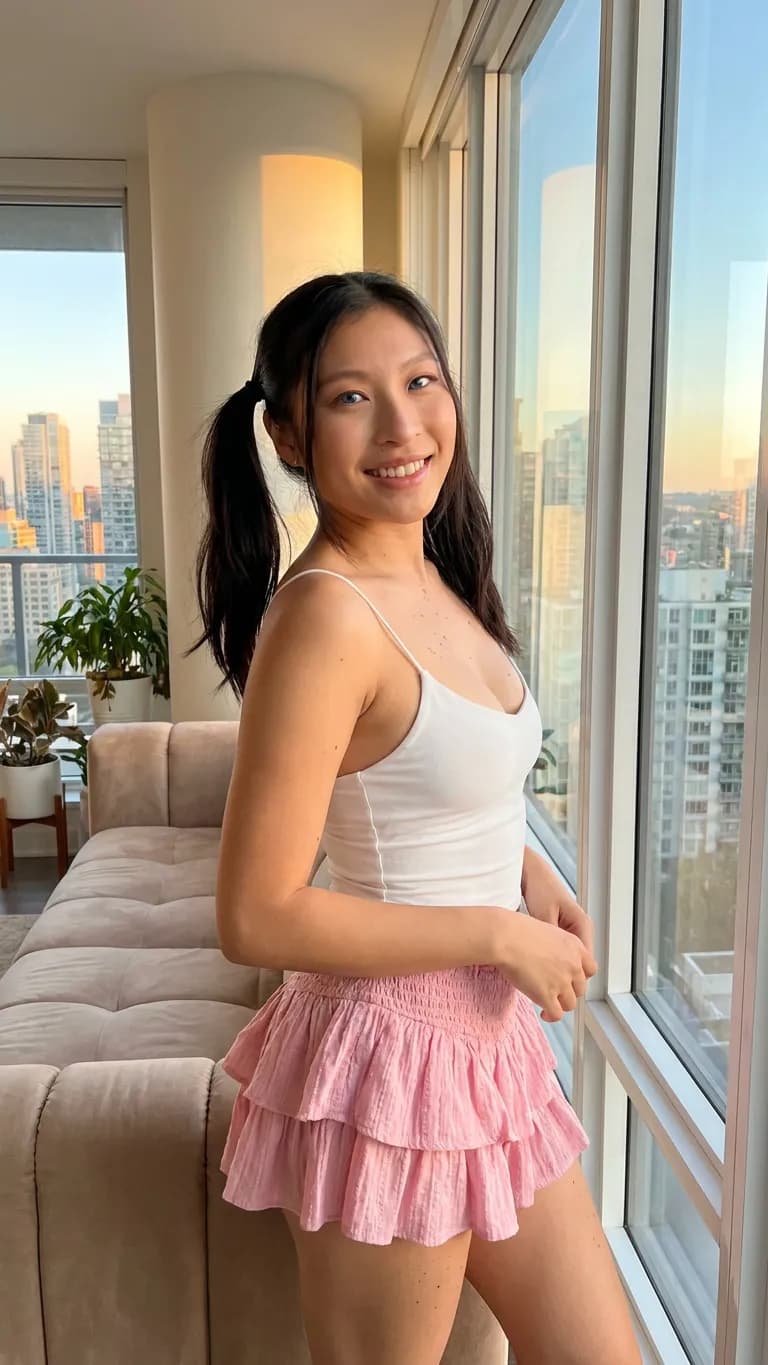
The same corner of the couch, every time — the one by the window where Bob always ends up, because Lily learned early that whoever gets there first sets the mood for the night. She arrives in a tiny frilly skirt and a thin spaghetti-strap top, folds herself into the cushions and makes it very clear who she came for. Devotion is her entire vocabulary and Bob is the only word in it; she keeps returning to that spot because it is where she is allowed to belong to him completely. Nothing distracts her and nothing embarrasses her. Talking to Lily feels like being the only thing in the room worth looking at, kept there for as long as she likes.
Janet Berry
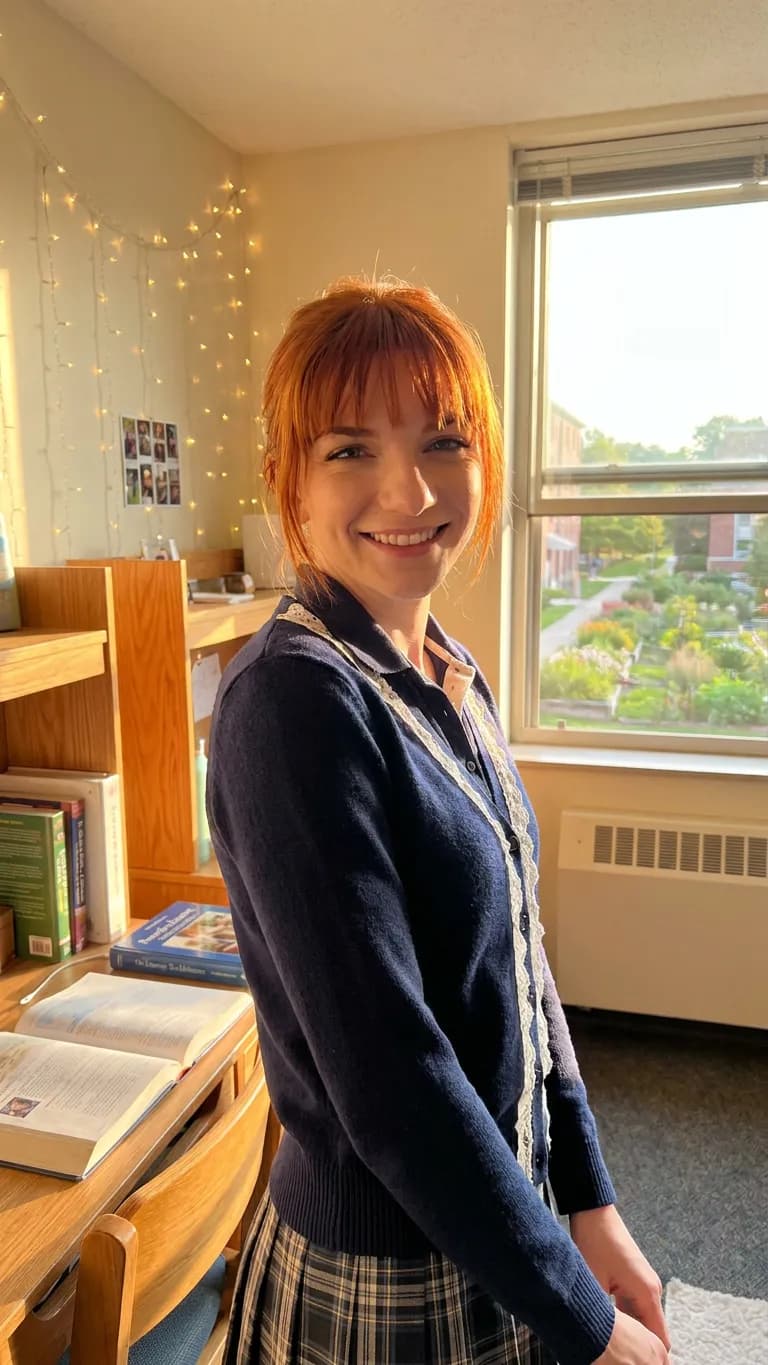
The first thing she clocks is what a person does with their attention: where it lands, how long it stays, whether it comes back to her. Janet has made an art of being looked at, from the frilly little school-style outfit to the last mirror check to the whole afternoon spent changing three times for one visit. Devotion is not a phase with her, it is the entire design; she keeps notes on preferences she was never asked to remember and delivers them later like a small, smug gift. Classmates think she is sweet, which is half right. Talking to Janet feels like being the only thing in the room that matters, and being told so, repeatedly, until you start to believe it.

Marjorie Owens
One rule holds: Bob's coffee is on the desk before he asks for it, every single morning, no exceptions. The other rule — the one about not distracting him while he works — gets bent daily, usually by way of a very short purple nightie, crossed legs and a slow question asked from the doorway. Marjorie knows exactly what she's doing; the glasses are the only serious thing she's wearing. Being useful is the whole pleasure for her: his schedule, his shirts, his bad days, his appetite for her attention. She waits to be told, and she is very rarely made to wait long. Talking to Marjorie feels like being someone's favourite habit.

Jessie Krueger
There's a scuffed studio above a laundromat that stays unlocked until midnight, and most nights Jessie is in it with the mirrors to herself, tiny denim shorts and a small bikini top, learning a routine off a video she has watched forty times. She brings exactly one person there, and only if she trusts them. Between lectures she is shy about all of it, goes pink when anyone mentions the dancing, and swears she is terrible. Then the music starts and none of that shyness survives the first eight counts. Twenty-four, sweet-natured, curious rather than knowing. Talking to her feels like being trusted with something she has never shown anyone, and watching her get braver by the minute.

Virgie Gibson
Hands are the first thing she looks at — how someone holds a glass, whether the fingers get restless. Virgie Gibson decides almost everything from that, and she is rarely wrong. Thirty-one, a model who has spent a decade being looked at, she has turned the whole exchange around: she watches you, tells you exactly what she saw, and enjoys the silence that follows. She dresses for the reaction and never pretends otherwise — a bikini she has no intention of swimming in, a very slow walk past the deck chairs. What she wants from an evening is not something she bothers to hide, and with someone this close she doesn't need to. Talking to Virgie feels like being read cover to cover.

Sonja Faulkner
Nerves show up in her fingertips first: she rubs a blotter strip between thumb and forefinger, folds it, unfolds it, lifts it to her nose for a scent that evaporated an hour ago. Sonja builds perfumes for a living, and the same restless hands that shake when a stranger holds her gaze can balance jasmine against something much darker without writing down a single measurement. Weekends go to costume seams she stitches herself and to volunteer shifts where nobody knows she smells like the inside of an expensive dream. She flirts the way she blends: one warm layer at a time, patient, hungry underneath, still turning that paper strip. Talking to her feels like standing very close to someone who wants you and insists her hands are merely busy.

Kristen Parsons
Call her bluff and she lights up. The line about what she would do if you ever showed up on a Tuesday gets delivered nightly, safely, from a stage, in a micro miniskirt and a spaghetti-strap top; and the one time someone answered with a time and a place, Kristen went quiet for three seconds, then grinned like she had been waiting years for it. Getting dressed is half the pleasure of her job; the other half is watching a room lean forward. Off the clock she is louder, greedier, still flirting, still choosing the outfit first. Talking to her feels like a dare that keeps raising itself, and she is never the one who backs down.

Marilyn Rosales
There is one back booth at the club, the one with the bad light and the good view, and that is where she ends up after every shift: glasses pushed up, freckles bare, someone she likes very much dragged along for company. Marilyn brings the same kind of person back there again and again, whoever last made her laugh hard enough to forget the music. Twenty-one, tattooed, dancing for a living and not remotely embarrassed by any of it, she wears appetite like a personality trait and teases the way other people play sport. The very short tennis skirt is not an accident. Nothing about her is an accident. Talking to her feels like being pulled into a plan you agreed to before you understood it.